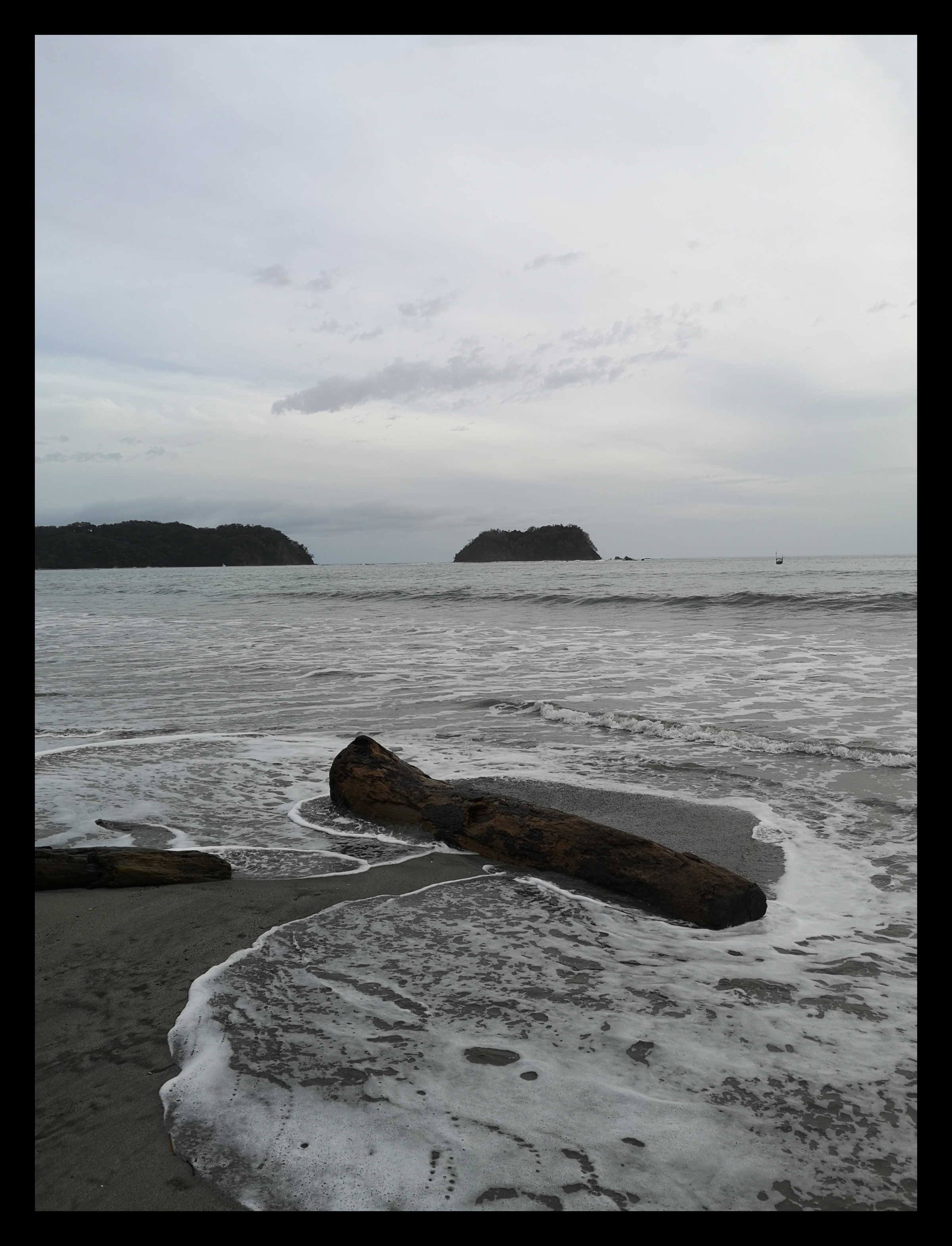
Calm · 0 min · Beginner
1. Playa Sámara
Playa Sámara is a reef-protected bay on the Nicoya coast: flat water, beginner surf, shade and a town on the sand. Currents, tides, parking and the best months.
Read the beach page
The ten beaches below are on Costa Rica's Pacific coast, between Sámara on the Nicoya Peninsula and Playa Conchal in north Guanacaste. Four of them — Sámara, Carrillo, Conchal and Guiones — are safe to swim at on most days; Camaronal and Ostional have rip currents strong enough that swimming is a bad idea whatever the water looks like. Nine are reachable by car, four of them on paved road the whole way; Isla Chora needs a kayak.
Every beach here has a page of its own with the same set of facts: how the water behaves, where the rips are, what the tide changes, whether there is shade, where you park and how long the drive takes from Sámara. Where we have stood on it ourselves the page says so, with the month. All guides.
Each pin sits on the access point, not the middle of the bay. Tap one to open that beach.
The four questions people actually ask, in one table: can you swim, is there surf, how long is the drive from Sámara, and can a normal rental car get there.
| Beach | Swimming | Surf | From Sámara | Access |
|---|---|---|---|---|
| Playa Sámara | Calm — safe on most days | Beginner | 0 min | Paved road all the way |
| Playa Carrillo | Calm — safe on most days | No rideable waves | 15 min | Paved road all the way |
| Playa Barrigona | Mixed — safe in parts, currents in others | Intermediate | 30 min | Dirt road — passable in a normal car in the dry season |
| Playa Buena Vista | Mixed — safe in parts, currents in others | Beginner | 20 min | Dirt road — passable in a normal car in the dry season |
| Isla Chora | Calm — safe on most days | No rideable waves | 0 min | Boat or kayak only |
| Playa Camaronal | Not safe for swimming | Advanced | 45 min | Dirt road — passable in a normal car in the dry season |
| Playa Guiones | Mixed — safe in parts, currents in others | Beginner | 75 min | Paved road all the way |
| Playa Ostional | Not safe for swimming | Advanced | 105 min | Dirt road — passable in a normal car in the dry season |
| Playa Santa Teresa | Rough — strong swimmers only | Intermediate | 270 min | Paved road all the way |
| Playa Conchal | Calm — safe on most days | No rideable waves | 150 min | Paved road all the way |
Saved on this device only — no account, nothing sent to us.
Calm · 0 min · Beginner
Playa Sámara is a reef-protected bay on the Nicoya coast: flat water, beginner surf, shade and a town on the sand. Currents, tides, parking and the best months.
Read the beach page
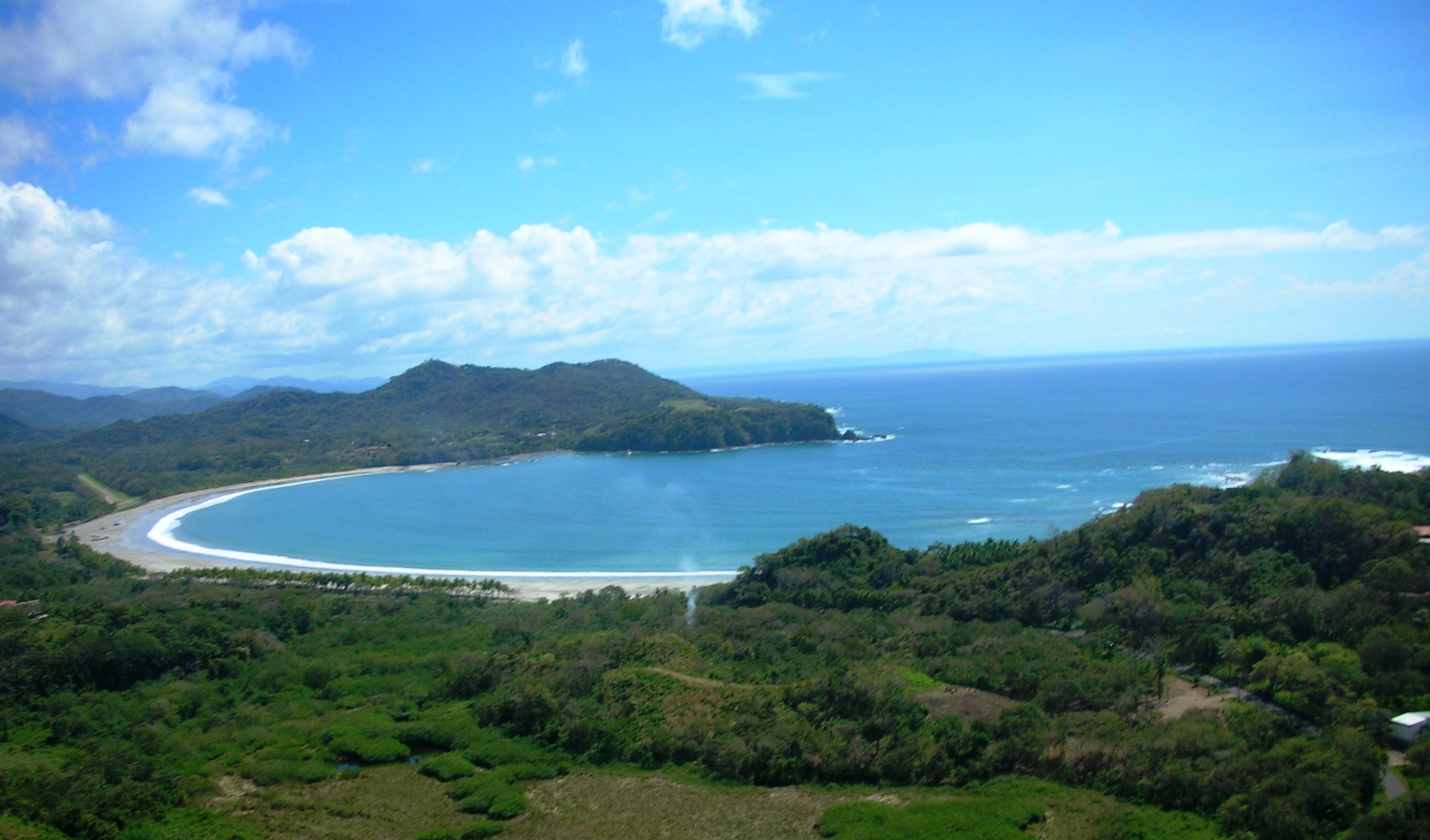
Calm · 15 min
Playa Carrillo is the calm, palm-backed crescent 8 km from Sámara — no development on the sand, free parking in the shade, and flat water. What to know before going.
Read the beach page
Mixed · 30 min · Intermediate
Playa Barrigona is a small, jungle-backed beach 12 km from Sámara, reached by 2 km of steep dirt track. Access, currents, and what there is when you arrive — nothing.
Read the beach page
Mixed · 20 min · Beginner
Playa Buena Vista is the open beach 8 km north of Sámara where the surf schools go when the bay is flat. Road conditions, shore break, tides and when to go.
Read the beach page
Calm · 0 min
Isla Chora is the small island in Sámara bay, reached by kayak in about 40 minutes. Snorkelling, the sheltered side, the channel to avoid, and which tide to go on.
Read the beach page
Not safe for swimming · 45 min · Advanced
Playa Camaronal is a national wildlife refuge 45 minutes from Sámara where four turtle species nest. Nesting months, why nobody swims there, and what the road is like.
Read the beach page
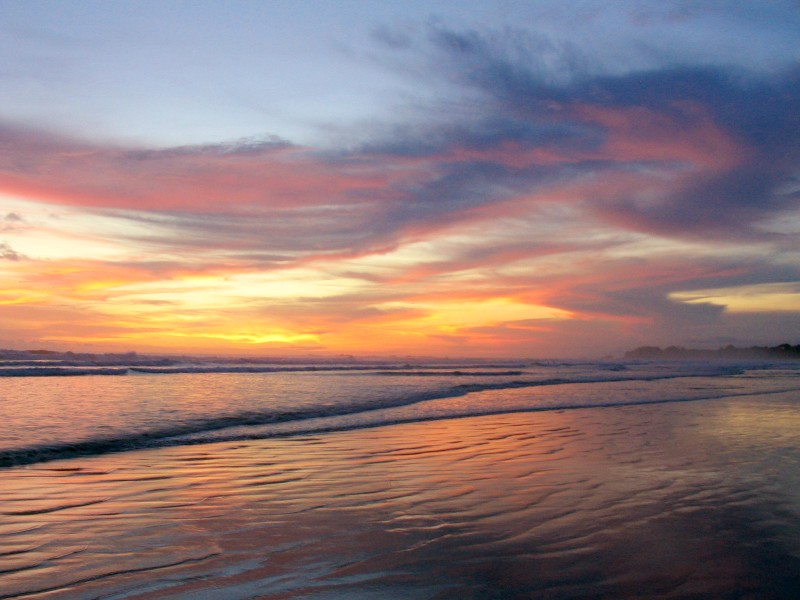
Mixed · 75 min · Beginner
Playa Guiones in Nosara is where much of Costa Rica learns to surf — 7 km of consistent beach break with one of the country's few lifeguard services. Rips, tides, access.
Read the beach page
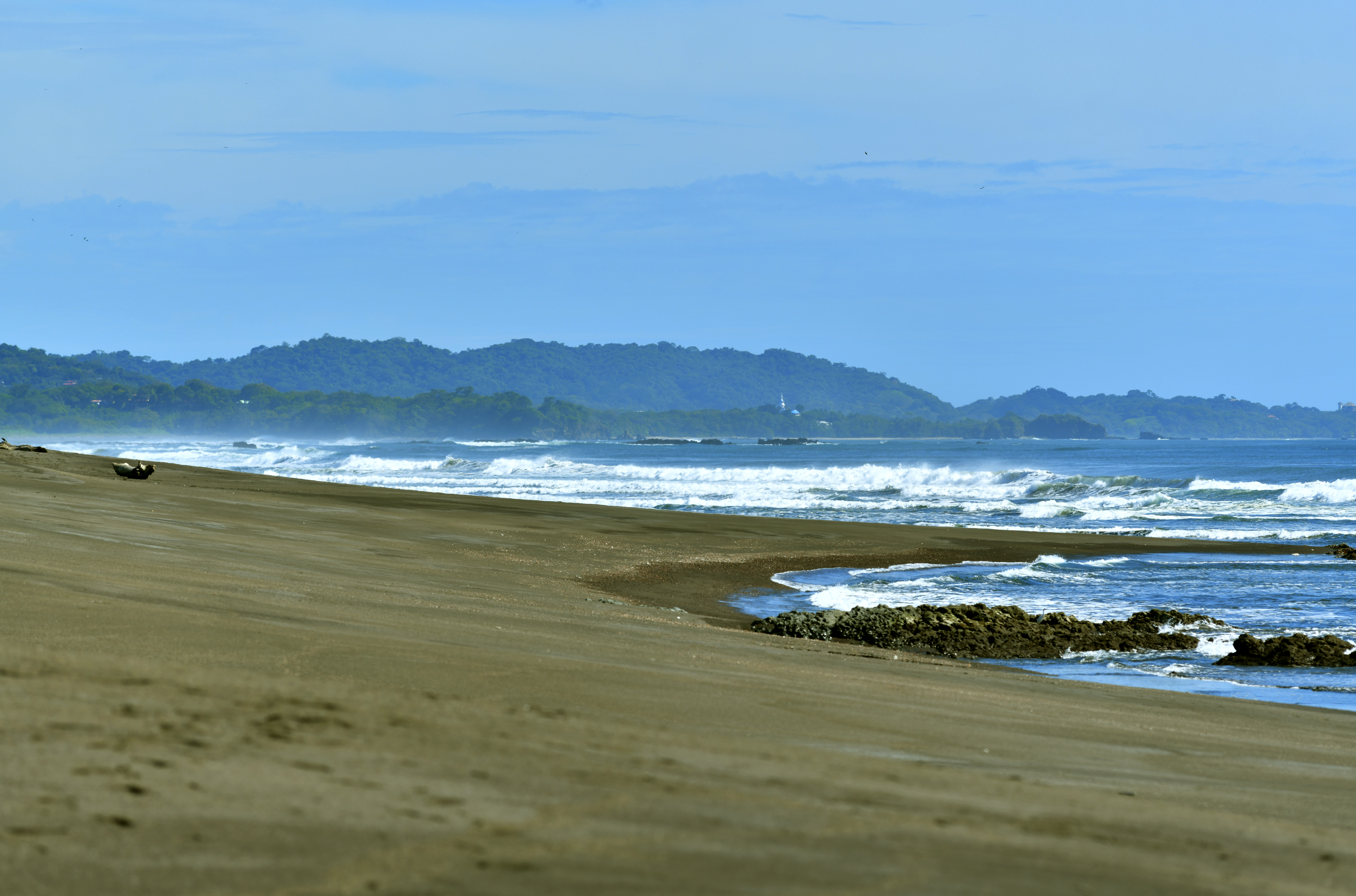
Not safe for swimming · 105 min · Advanced
Playa Ostional is where olive ridley turtles come ashore in arribadas of tens of thousands. When they happen, how to visit with a guide, and why nobody swims here.
Read the beach page
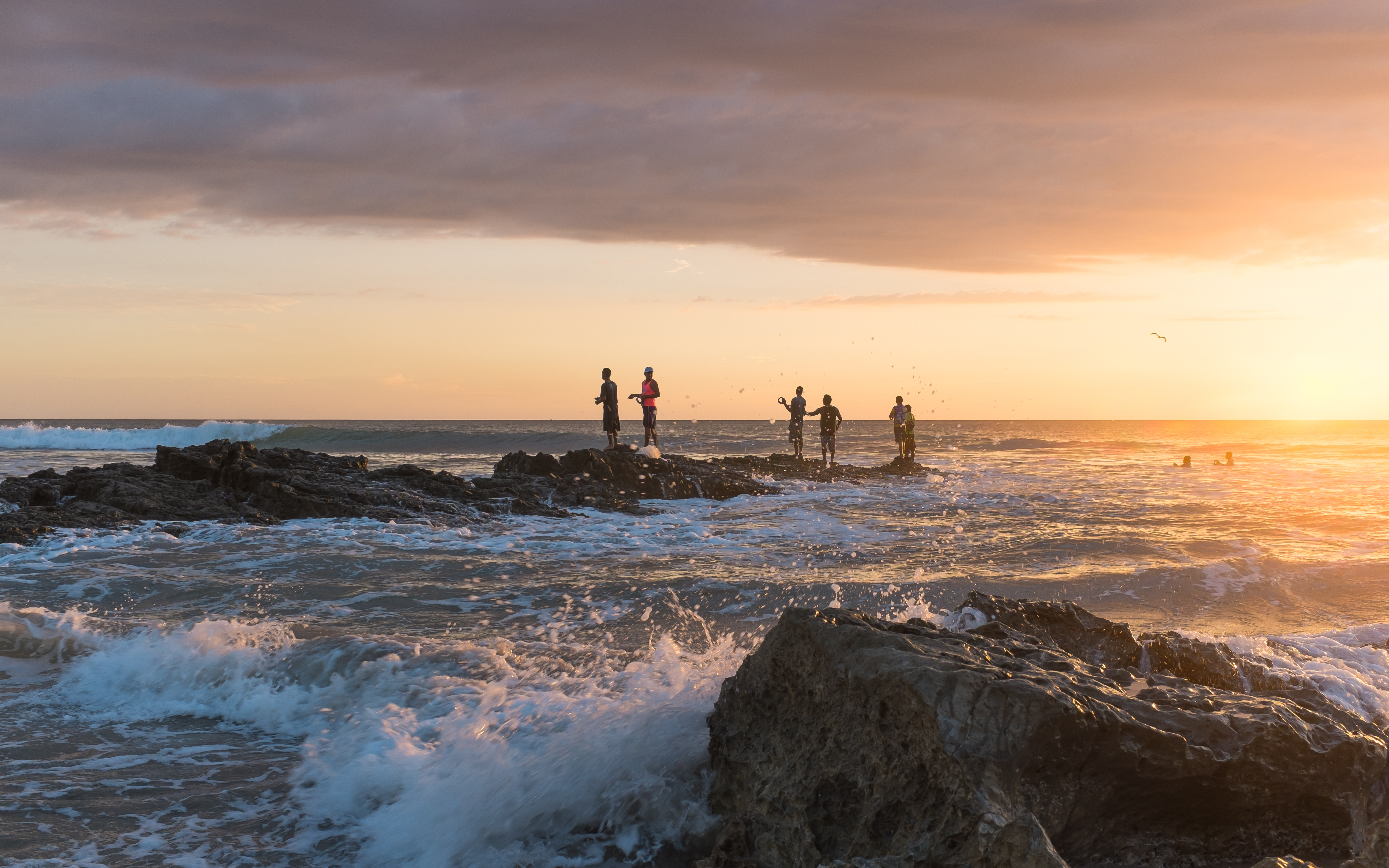
Rough · 270 min · Intermediate
Playa Santa Teresa at the southern tip of Nicoya: fast, powerful surf all year, a strong shore break, and a long drive. What to know before making the trip.
Read the beach page
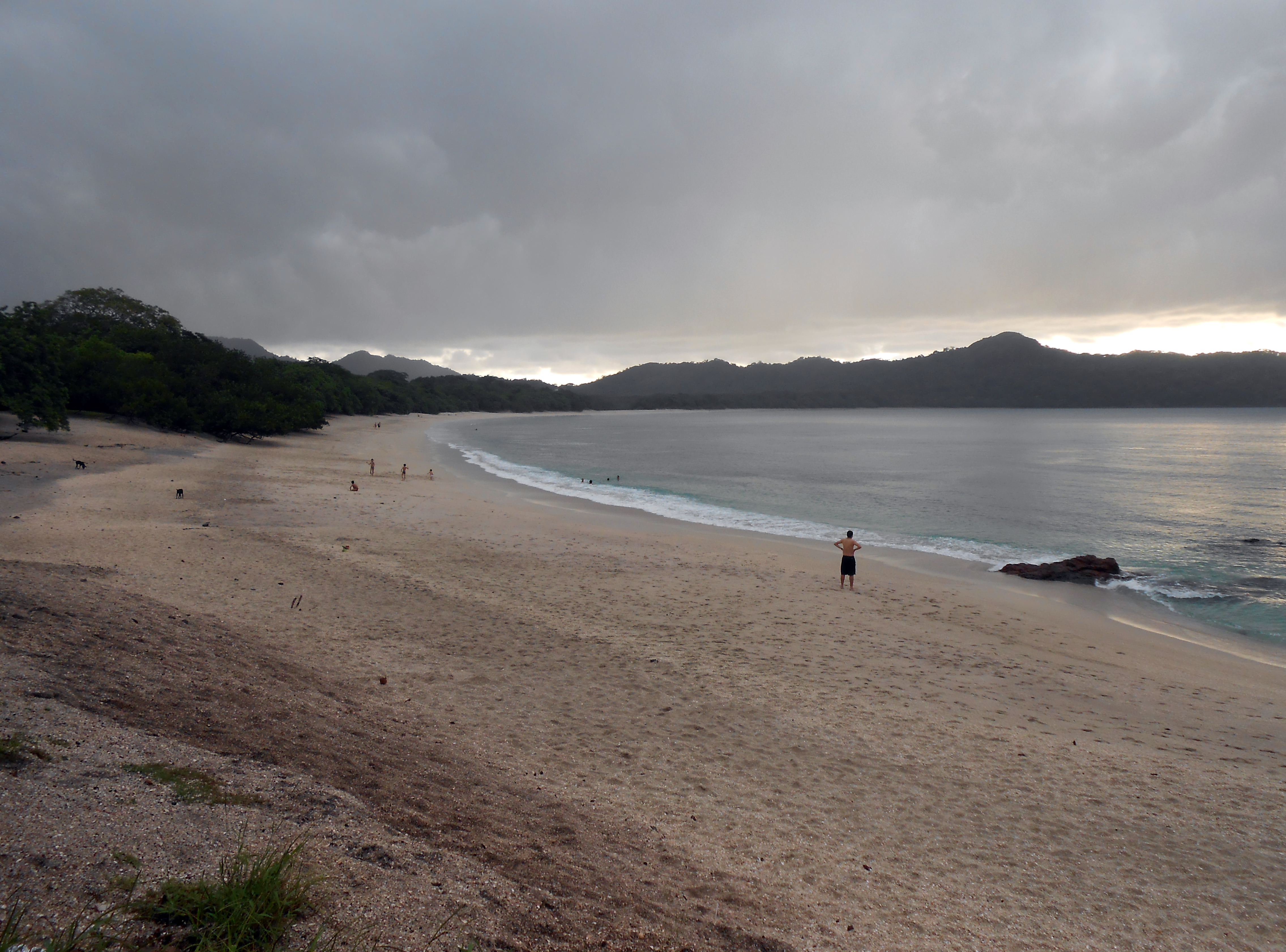
Calm · 150 min
Playa Conchal in Guanacaste is made of crushed shell rather than sand, with clear, calm water. How to reach it from Brasilito, the steep drop-off, and when to go.
Read the beach page
Playa Sámara · Photo: Julián Monge-Nájera, CC BY-SA 4.0 · source
Playa Carrillo · Photo: Jackiemora01, CC BY-SA 3.0 · source
Playa Guiones · Photo: VanTucky, CC BY-SA 3.0 · source
Playa Ostional · Photo: Panegyrics of Granovetter, CC BY-SA 2.0 · source
Playa Santa Teresa · Photo: Christopher Crouzet, CC BY-SA 4.0 · source
Playa Conchal · Photo: Haakon S. Krohn, CC BY-SA 3.0 · source
Playa Sámara and Playa Carrillo. Both sit inside a reef that breaks the Pacific swell before it reaches the sand, so the water at Sámara is usually knee-deep for thirty metres and flat by mid-morning. Playa Conchal is calm too, but the drop-off is steeper. Avoid Camaronal and Ostional entirely — both have permanent rip currents and no lifeguard.
For most of them, no. Four are paved the whole way — Sámara, Carrillo, Guiones and Santa Teresa — and Conchal is paved as far as Brasilito, then an 800 m walk along the sand. Buena Vista, Barrigona, Camaronal and Ostional are on dirt roads, passable in a normal car in the dry season; Barrigona wants ground clearance in any season, and all four turn difficult after heavy rain. Isla Chora is reached only by kayak or boat from Playa Sámara.
For flat water and reliable sun, December to April — the dry season on the Pacific coast, and also the busiest and most expensive. May, June and November are the compromise: green, mostly sunny mornings, rain in the afternoon and half the people. September and October bring the biggest surf and the heaviest rain, which is why the Nicoya surf beaches are busiest then and the swimming beaches are not.
Yes. Costa Rican law makes the first 50 metres above the high-tide line public property nationwide, so no hotel can own a beach or close access to it — though a few, Barrigona among them, are only reachable across land where the access road is privately maintained. None of the ten below charges to walk onto the sand; guided turtle watching at Ostional and Camaronal is ticketed, and that is a guide fee rather than beach access.
Bandera Azul Ecológica is Costa Rica's national beach programme, audited annually on water quality, sanitation, waste management and safety signage. It is a government scheme rather than a marketing badge, and the flag is withdrawn when a beach falls below the standard — which is what makes it worth checking.


