Playa Camaronal: a turtle refuge, not a swimming beach
Playa Camaronal is a three-kilometre dark-sand beach inside a national wildlife refuge, about 45 minutes south-east of Sámara past Carrillo. Olive ridley, leatherback and hawksbill turtles nest along it, most heavily between July and December. It has a steep profile, a heavy shore break and permanent rip currents — it is a beach to visit for the turtles and for the surf, and not one to swim at.
The facts
| Swimming | Not safe for swimming |
|---|---|
| Rip currents | A steep beach with a heavy shore break and permanent rip currents. This is a nesting refuge with no lifeguard and no bathers — go for the turtles, not for the water. |
| Tides | The arribadas and the individual nesting runs happen at night on a rising tide. |
| Surf | Advanced — A powerful, hollow beach break with a rivermouth wave — experienced surfers only |
| Snorkelling | No |
| Water | 28 °C |
| Getting there | Dirt road — passable in a normal car in the dry season — Paved as far as Carrillo, then unpaved with two river crossings that are impassable in the wet season |
| Parking | At the refuge entrance, free by day; the turtle tours meet here after dark |
| Drive from Sámara | 45 min |
| Length | 3 km |
| Sand | Dark grey, almost black where the river runs out |
| Shade | No |
| Lifeguard | No |
| Bandera Azul | No |
| Facilities | Ranger station, Guided turtle tours |
| Turtle nesting | Olive ridley, leatherback and hawksbill — heaviest Jul–Dec, peaking Sep–Oct |
| Best months | Sep–Oct for nesting; Jan–Apr for the road |
| Where it is | Refugio Nacional de Vida Silvestre Camaronal, Nandayure, Guanacaste — 20 km south-east of Sámara past Carrillo |
| GPS | 9.82830, -85.41420 |
Not yet checked in person — compiled from published sources
What makes Camaronal a refuge?
The nesting. The Refugio Nacional de Vida Silvestre Camaronal was created around a beach that several turtle species use, and it is one of the few places in Costa Rica where olive ridley, leatherback and hawksbill nesting all occur on the same stretch of sand. Rangers patrol it, tours run at night with a guide, and hatchling releases happen through the season. Details and opening arrangements come from SINAC, the national conservation authority that administers it.
When do the turtles come?
Nesting runs most of the year and concentrates between July and December, with the heaviest activity around September and October. Turtles come ashore at night on a rising tide, so tours leave after dark and the timing shifts with the moon — a booking is made against the tide table rather than against a clock.
Why is nobody in the water?
Because the beach shelves steeply into a heavy shore break with rips running out along its length, and because there is no lifeguard and, most of the time, nobody else on the sand. It is a serious surf beach — a fast, hollow break with a rivermouth wave that experienced surfers make the drive for — and it is a poor swimming beach for exactly the same reasons.
What is the drive like?
Paved as far as Carrillo, then unpaved with two river crossings. In the dry season it is a straightforward 45 minutes from Sámara. In the wet season the crossings are the whole question, and they can close the road for days. If you are going for a night tour, ask about the rivers when you book, not when you arrive.
Where it is
Refugio Nacional de Vida Silvestre Camaronal, Nandayure, Guanacaste — 20 km south-east of Sámara past Carrillo
Navigate · Opens Google Maps directions to this beach's access point, not to the middle of the bay.
Frequently asked questions
When can you see turtles at Playa Camaronal?
Nesting happens most of the year and peaks between July and December, heaviest around September and October. Olive ridley, leatherback and hawksbill all use the beach. Turtles come ashore after dark on a rising tide, so tours run at night and their timing moves with the tide table.
Can you swim at Playa Camaronal?
No. The beach shelves steeply into a heavy shore break with permanent rip currents, there is no lifeguard, and on most days there is nobody else there. It is a nesting refuge and a surf beach — go for the turtles or the waves, not for a swim.
How do you get to Playa Camaronal from Sámara?
South-east past Carrillo, about 20 km and 45 minutes. The road is paved to Carrillo and unpaved after it, with two river crossings that are easy in the dry season and impassable after heavy rain. Ask about the rivers before setting out in the green season.
Beaches nearby
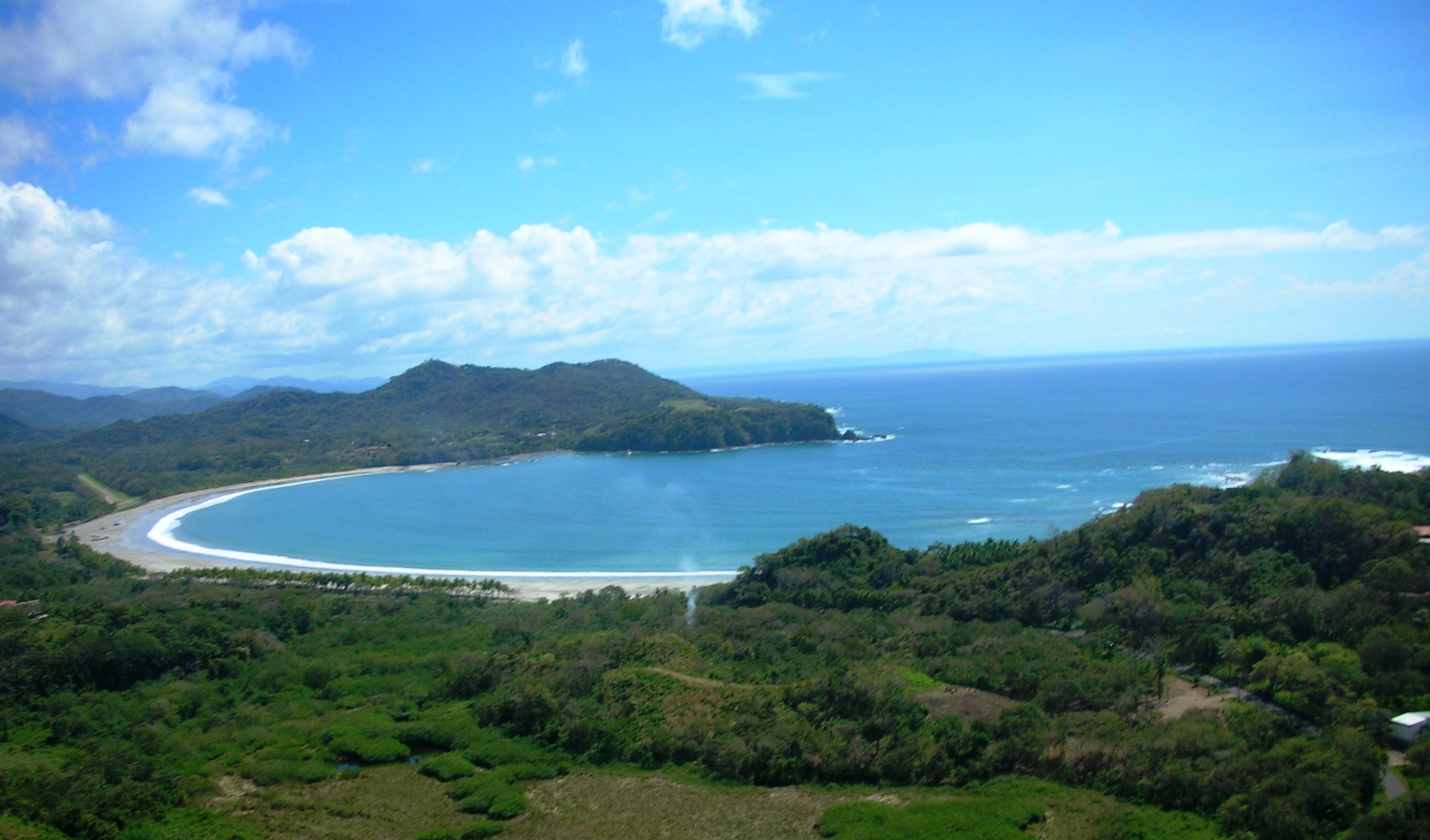
Calm · 15 min
Playa Carrillo
Playa Carrillo is the calm, palm-backed crescent 8 km from Sámara — no development on the sand, free parking in the shade, and flat water. What to know before going.
Read the beach page
Calm · 0 min
Isla Chora
Isla Chora is the small island in Sámara bay, reached by kayak in about 40 minutes. Snorkelling, the sheltered side, the channel to avoid, and which tide to go on.
Read the beach page
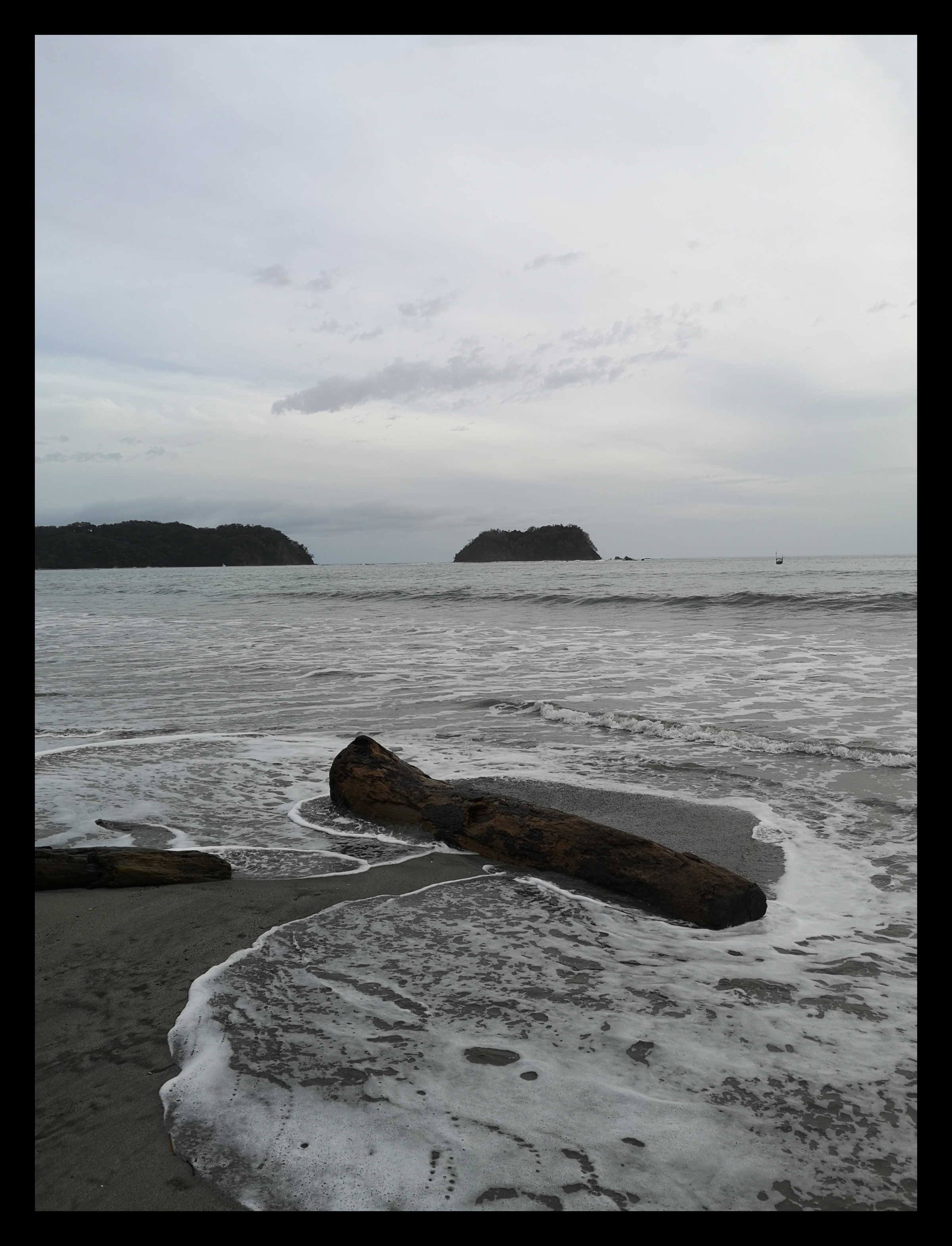
Calm · 0 min · Beginner
Playa Sámara
Playa Sámara is a reef-protected bay on the Nicoya coast: flat water, beginner surf, shade and a town on the sand. Currents, tides, parking and the best months.
Read the beach page
Comments
No comments yet. If you have been recently, the road and the current are the two things worth telling us about.
Thank you — your comment is with us and will appear once it has been read.